
People & BodyBody Parts
👂 Ear Emoji
Ear conveys ear references, body-related descriptions, gestures, or visual shorthand, with tone shaped by nearby text.
QUICK FACTS
- Official name
- Ear
- Category
- People & Body
- Subcategory
- Body Parts
- Unicode
- U+1F442
- Emoji version
- 0.6
- Unicode version
- 17.0
Lookup Data
Names, Keywords and Search Terms
Search terms, common aliases, and lookup keywords.
Official Name
Ear
Subcategory: Body PartsAliases & Common Names
- ear
Keywords & Search Terms
- ear
- body
- parts
- person
- gesture
- people
- role
- activity
- identity
- references
- related
- descriptions
Developer Reference
👂 Emoji Codes
Copy Unicode, HTML, JavaScript, CSS, and programming escape values.
FormatCode ValueAction
Unicode
U+1F442Code points
U+1F442UTF-8 bytes
0xF0 0x9F 0x91 0x82UTF-16
\uD83D\uDC42HTML decimal entity
👂HTML hexadecimal entity
👂JavaScript escape
\u{1F442}CSS escape
\1F442 Python string
\U0001F442Variations
Emoji Variants
Related skin tone, gender, or composition variations.
Skin tone variants
Discovery
Related People & Body Emojis
Explore other emojis frequently used alongside 👂.
Emoji Styles
See 👂 in Different Styles
Compare licensed artwork side by side, then choose a style to use in Preview & Download.
Google Noto
SIL Open Font License 1.1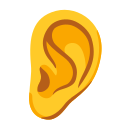
Twemoji
CC BY 4.0
OpenMoji
CC BY-SA 4.0
Why do emoji designs look different?
Unicode defines the emoji character or sequence, while each artwork set decides how it is drawn. That is why the same emoji can look different between devices, apps, and design systems.
Utilities
More Emoji Tools
Helpful tools for discovering, formatting, and converting emojis.
Emoji PickerBrowse emojis visually and copy one instantly.
Emoji SearchFind an emoji by name, meaning, keyword, or Unicode.
Emoji Meaning FinderLook up emoji names, meanings, Unicode, and examples.
Emoji to UnicodeConvert emojis to Unicode code points and entities.
Unicode to EmojiConvert Unicode formats into emoji characters.
FAQ
Questions About 👂
Frequently asked questions about meaning, copying, PNG export, and Unicode data.
Ear conveys ear references, body-related descriptions, gestures, or visual shorthand, with tone shaped by nearby text.
Yes. When licensed artwork is available, choose a style and download 1× (128×128), 2× (256×256), 4× (512×512), or 8× (1024×1024) PNG artwork. EmojiMint shows the selected provider, background, and exact pixel dimensions before download.
Yes. The surrounding words, relationship, and platform can change how 👂 is read, so add text when the intent matters.
The Unicode code point for 👂 is U+1F442.
Close alternatives include 🦻 Ear With Hearing Aid, 🫀 Anatomical Heart, 🫦 Biting Lip, 🦴 Bone. Choose the one whose expression or symbol best matches the message.
Use the copy button on this page to copy 👂, or select the emoji character directly and copy it from your browser.